It started with a WhatsApp message
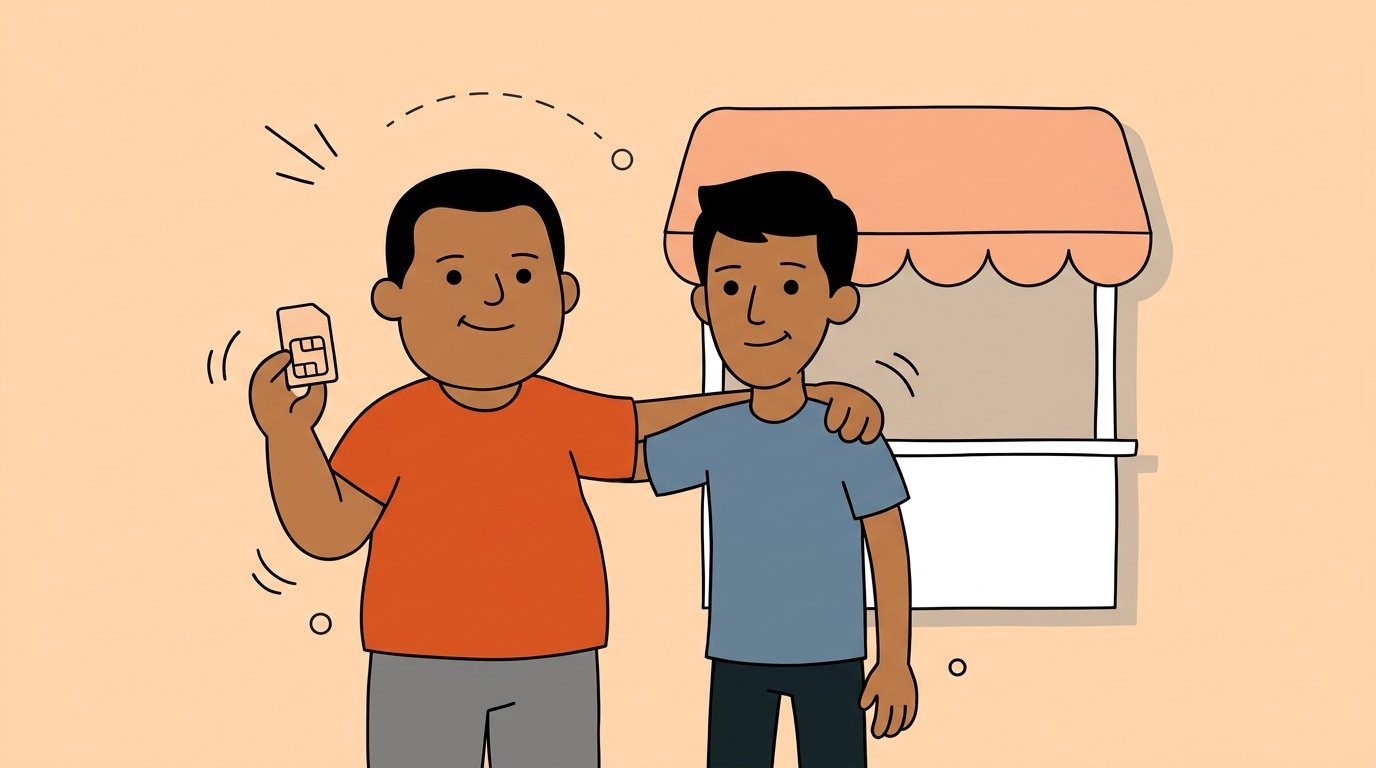
Kadek and I grew up in the same village. We knew each other the way everyone in a Balinese village does: a nod at ceremonies, a few words here and there. We weren't close friends, and we didn't talk much.
Then one day he messaged me on WhatsApp. He had a business idea: help visitors get a local Bali SIM without the counters, the queues and the confusion. He knew the SIM side. He needed someone who could build the website. That's me, a software engineer.
I didn't say yes right away, and there's a reason for that.
I love building products. As a software engineer, I had built several before, long before AI coding tools existed. Every one of them failed. Not because they were broken, but because I built what I thought was cool. It turned out nobody wanted them, or nobody knew they existed.
Kadek's idea was different. It came from his own experience, not from a hunch. And other businesses were already selling SIMs to visitors online, which proved the customers were real. For once, I wouldn't be guessing whether anyone wanted the thing I was building.
The timing helped too. I had just finished two mobile apps built entirely with AI coding tools, and I wanted to know whether that way of working would hold up in a real business, with real customers and real money. So I said yes.
Built in a week, live in the second

I spent the first week building the site with AI doing the typing and me doing the deciding: what the pages say, how payment works, what happens after someone orders. The second week was testing, fixing, and testing again.
In April 2026, GetBaliSIM went live. Two people, one website, and no idea whether anyone would actually buy.
Day one: our first refund

People did buy, on the very first day. And one of those first customers turned into a small disaster.
In Indonesia, every SIM has to be registered with the owner's passport, and the phone's IMEI number has to be registered too. No seller can skip this; it's the law. We asked for the documents after payment, and this customer hesitated. They hadn't expected it, they weren't comfortable sending a passport photo, and we couldn't activate the line without it.
We refunded them in full. It stung, but it taught us the most important lesson of the whole journey: the problem wasn't the customer. It was us, for not telling them clearly before they paid.
We tried to sell to everyone

Looking back, our first site tried to please everybody. It read like any other travel eSIM: quick, easy, for anyone. So people who just wanted a bit of data with no paperwork bought from us, then got surprised.
So we got specific. We kept rewriting the site until it said exactly what we are: a local Bali eSIM with a real local +62 number, and yes, you'll need to send your documents after you pay, because Indonesian law requires it.
Something nice happened after that. Our customers became the right customers. The people who bought knew what to expect: the documents, the process, the local number they actually wanted. Fewer surprises for them, fewer refunds for us.
Then we got bold

If we were going to ask people for their passport, we had to earn that trust. Two decisions came out of that.
- Your documents don't stay with us. Once your line is registered, the system deletes your passport photo and IMEI screenshot automatically after 7 days. Nobody has to remember to do it.
- A full refund if it doesn't work. If we can't get you connected, you get 100% of your money back. Day one taught us that one the hard way, so now it's simply a promise.
Both felt a little scary to commit to. Both made it easier for people to say yes.
Running a SIM shop from Telegram
With two people, every minute matters, so we automated almost everything on the admin side. Every new order shows up in our Telegram group, with its own thread. From there we check documents, approve them, ask for a clearer photo if needed, and send the eSIM.
We don't even open our admin dashboard anymore. That leaves more time for the parts a machine can't do. Kadek keeps the eSIM stock topped up, checks every document and registers each line, so it's active before you land. Support we share: when you message us on WhatsApp, one of us answers.
"Wait, ChatGPT sent you?"

Here's something we didn't see coming. When we looked at where our early orders came from, many of them, including our very first one, came from people who had asked ChatGPT how to get a SIM in Bali. We hadn't run a single ad. We still don't fully know why it picked us, but we suspect a simple, clear website helps an AI understand what you do.
After that, we put more work into our guides and into Google. Today most of our customers find us through a Google search.
100 orders later

On 25 October 2026, we received our 100th order. For a big company that's a quiet Tuesday. For two people from the same village who barely talked before all this, it felt like a ceremony.
We've made our mistakes, and we've built a system out of them. The document step is still the hardest part of this business, and it probably always will be. But we've stopped fighting it. It's part of getting a real local number in Indonesia, and our job is to make it as quick and painless as possible.
So here we are, ready for the next 100. If you're one of them, have a look at our plans, or just say hi on WhatsApp. Kadek or I will answer. The cats won't.