Handing your passport over for a phone number feels strange. You're on holiday, you want maps and a ride from the airport, and suddenly a stranger is photographing your documents. We get asked about this more than almost anything else, usually with a note of suspicion attached — which is fair.
So here's the straight version, including the part most companies leave out: we wish this rule didn't exist either.
The Short Answer
Indonesian law requires every prepaid number to be registered to an identifiable person. For foreigners that means a passport. There's no legal way around it — not at the airport, not at a corner shop, not with us. Any seller who tells you otherwise is either registering the number to somebody else's identity or handing you a line that will stop working. What you can choose is how much of the hassle lands on you.
Why Indonesia Does This
Prepaid SIM registration arrived in Indonesia for the same reason it has in dozens of countries: an anonymous phone number is a useful thing to own if you're running a scam.
Indonesia had a genuine problem with it. Fraud by SMS and phone call, numbers bought by the handful and thrown away after a fortnight of calls to strangers, accounts opened under identities that didn't exist. When a number can't be traced to anyone, investigating any of that is close to impossible — and the person losing their savings to it is usually an ordinary Indonesian.
The government's answer was to put an ID behind every number. Indonesians register with their national ID card. Foreigners register with a passport. The rules have tightened since — these days a number is sold switched off and only comes alive once the registration has gone through, which is why nobody can hand you a working line in thirty seconds.
You don't have to agree with the policy. But that's the actual reason it exists, and it was never aimed at tourists — you're just inside the net.
What It Means for You in Practice
Three things, none of them dramatic:
You can't buy a working number anonymously. Not anywhere in Indonesia, by any seller, at any price. A SIM handed over without registration is a SIM that stops.
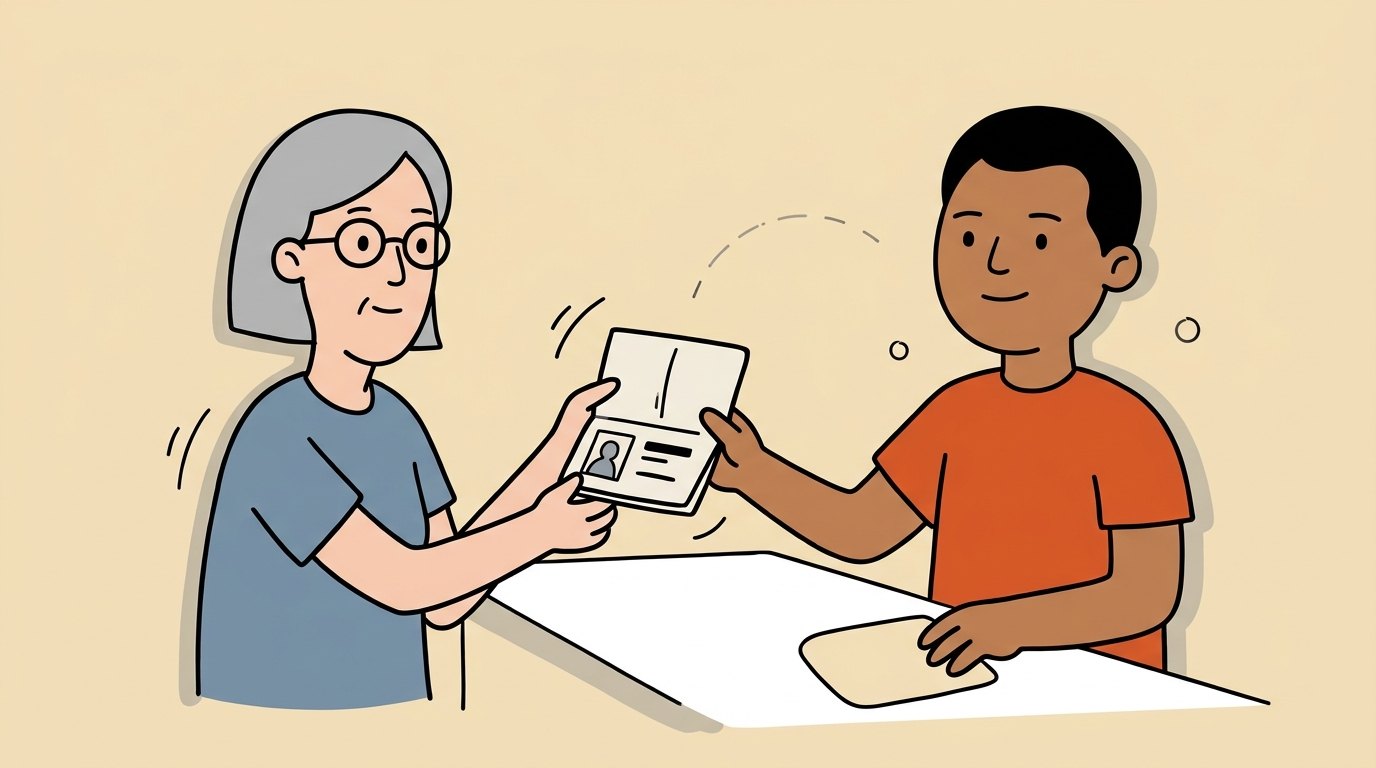
Your passport gets used, not kept. They record your name, passport number, nationality and date of birth. That's what Telkomsel needs to put the number in a real person's name — nothing more.
It takes a bit of time. There's a human in the process, which is why nobody can honestly promise you a working Indonesian number sixty seconds after you pay. If someone does promise that, they're selling a data-only eSIM from abroad — it skips registration because it never gives you an Indonesian number at all.
Why We Built GetBaliSIM Around This
We're a Bali team. We didn't write this rule and we'd quietly prefer it gone — it's friction between a traveller and the thing they need, and we spend real hours of every week on it.
But it's the law, and we're not interested in the alternative. Plenty of sellers get around the paperwork by registering tourist numbers under Indonesian identities that aren't yours. It works right up until it doesn't, and when it doesn't, you're the one standing in a villa with a dead line and no recourse.
So we took the other road: do the registration properly, and absorb as much of the pain as a company legally can.
- For an eSIM, you send us your passport page, your IMEI and your phone's About screen, and we handle the registration from here. You install the eSIM calmly at home before you fly.
- For a physical SIM card, you upload nothing at all. Our staff come to your hotel or villa with the card and do the registration in front of you. Bring your passport to the meeting and that's the whole of your involvement.
- Your documents don't live on our servers. We delete them seven days after your line is activated. We need them to register a number, not to keep a file on you.
That's the whole of it, honestly: the rule is annoying, it isn't going anywhere, and our job is to make it take up as little of your holiday as possible.
Why an eSIM Needs Your IMEI Too
This one surprises people, and it's a separate rule from the registration above.
Indonesia tracks phone hardware as well as phone numbers, through the IMEI — the serial number of the handset itself. The rule exists to stop untaxed imported phones being sold locally, which has nothing to do with you as a visitor. But it does mean the number we register has to be tied to the device it'll run on, so we ask for your IMEI (dial *#06# to see it) and a screenshot of your About screen to confirm the model.
It also means an activated eSIM needs to actually be used. If a line sits untouched for too long after activation, the IMEI can be flagged. That's why we activate about 24 hours before you land rather than the day you order — close enough to your arrival that your phone starts using it almost immediately.
The Questions People Actually Ask
Can I just buy one at the airport and skip this? No. The airport counters run the same registration, with your passport, at the arrivals hall. The rule is national. What differs between sellers is the price and how much queueing you do.
Is it safe to send my passport photo? It's a reasonable thing to be careful about. Send it only to a seller you can identify — a real company, a real address, a way to reach a human. Ours goes through our order page, not a chat app, and gets deleted a week after activation.
Do I have to be registered to receive SMS codes? Your number has to be registered to work at all, so yes, in the sense that nothing happens without it. Once it's live, it's an ordinary Indonesian number and local apps treat it as one.
What if I'm moving here, not visiting? People with a residence permit register a different way than tourists do. If that's you, message us and we'll point you the right way rather than sell you the wrong thing.
In Short
Indonesia requires a real identity behind every phone number, and it has reasons that have nothing to do with you. You can't opt out, and neither can we. What you can do is pick someone who does the paperwork correctly and keeps your part of it short.